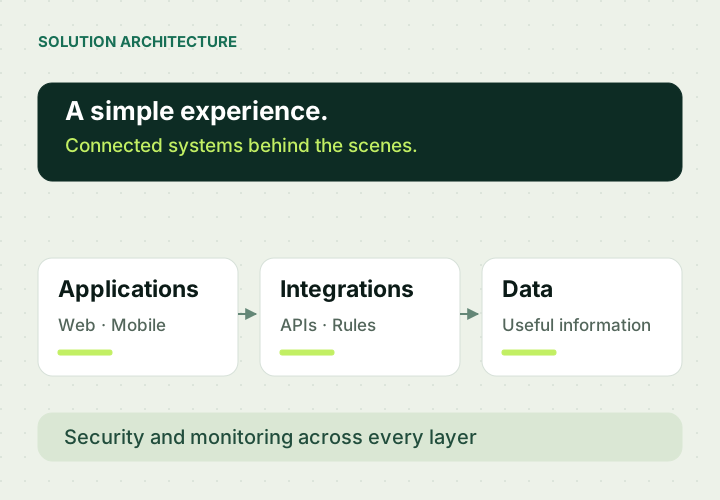
The pressure to design a solution that is “ready for anything” often creates systems that cost more and are harder to change. Pragmatism means investing where the cost of being wrong is high and postponing reversible choices until there is enough information.
Constraints before patterns
Volume, availability, team skills, legal requirements and delivery speed define the solution space. A technically elegant pattern can be a poor choice when it ignores these constraints.
Distinguish reversible decisions
A choice that is easy to change does not deserve weeks of analysis. Domain boundaries, core data models and supplier dependencies, however, require care because the cost of changing them grows over time.
Architecture is about managing the cost of change, not eliminating change.
Modularity with purpose
Starting with a modular application is often more efficient than distributing components prematurely. Well-defined boundaries allow services to be extracted when scale, teams or isolation requirements justify it.
Record and validate
Short decision records preserve context. Technical and business metrics show whether assumptions remain valid. Architecture thus becomes a learning process rather than a frozen document.